How to Remove Blood Stains: A Complete Guide to Saving Your Clothes
It happens to the best of us. A scraped knee, a nosebleed, or a kitchen mishap results in a dreaded spot of red on your favorite shirt or jeans. Panic sets in. Blood stains are notorious for being difficult to remove, but they don’t have to mean the end of your garment’s life.
Knowing how to remove blood stains effectively requires quick action and the right techniques. Whether the stain is fresh or dried, there are proven methods to tackle it. This guide covers the best ways to remove blood stains, common pitfalls to avoid, and when it’s time to call in the professionals.
The Golden Rule: Act Fast and Use Cold Water
Before diving into specific solutions, there is one critical rule you must follow: never use hot water on a blood stain.
Heat acts as a fixative for protein-based stains like blood. If you run a bloody shirt under hot water or toss it in a hot dryer, you essentially cook the proteins into the fabric fibers, making the stain nearly impossible to remove.
Instead, always start with cold water. If the stain is fresh, running it under a cold tap immediately can often flush out the majority of the blood before it sets.
How to Clean Blood Stains from Clothes: Fresh Stains
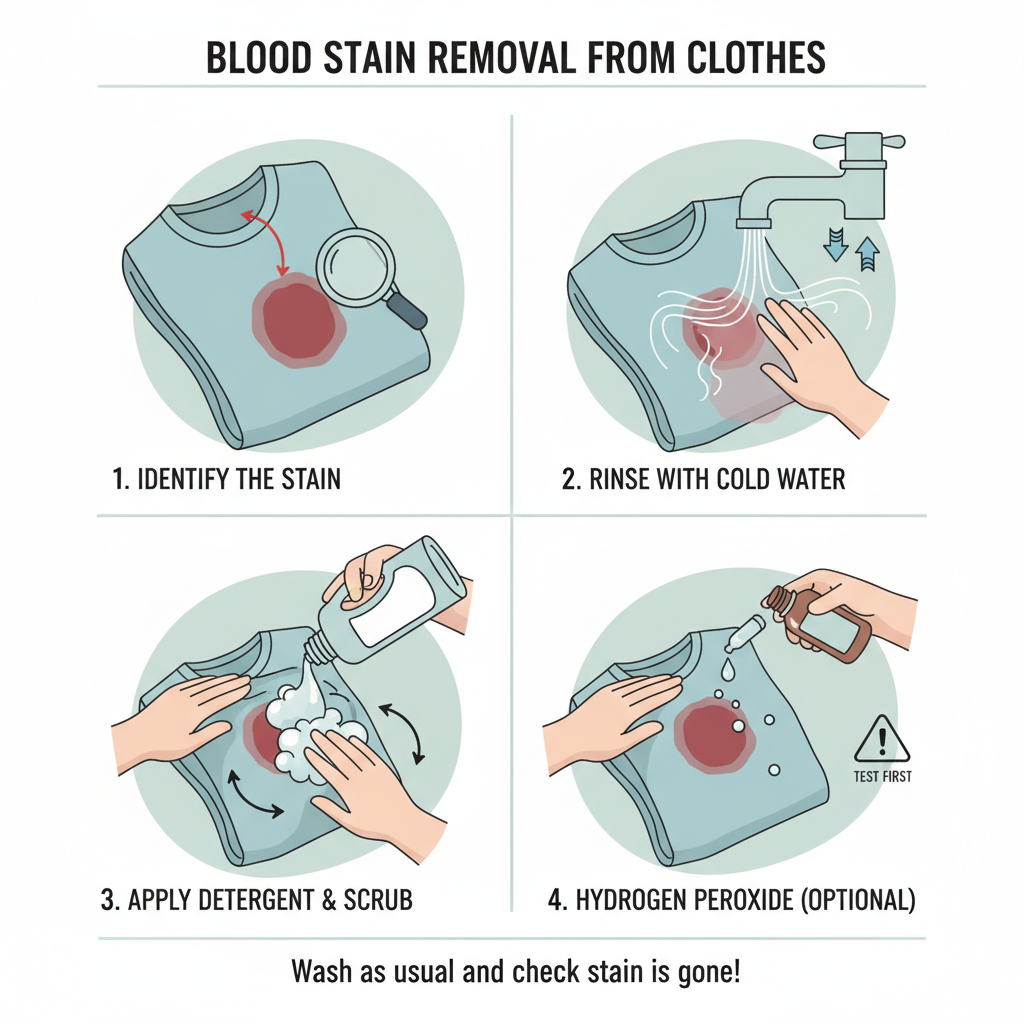
Dealing with a fresh accident? Time is your best ally. Here is a simple step-by-step process for fresh stains on washable fabrics like cotton or linen.
1. Flush with Cold Water
Turn the garment inside out and hold the stained area under a running faucet of cold water. Flushing from the back pushes the blood out of the fibers rather than deeper into them.
2. Treat with Soap or Detergent
If water alone doesn’t do the trick, apply a small amount of liquid laundry detergent or hand soap directly to the spot. Gently rub the fabric together with your fingers to work the soap into the fibers. Let it sit for 15 minutes.
3. Rinse and Check
Rinse thoroughly with cold water. If the stain is gone, wash the item as usual. If a shadow remains, do not put it in the dryer. Instead, move on to a stronger removal method.
Tips for Removing Dried Blood Stains
Dried blood is more stubborn because it has had time to bond with the fabric. However, hope is not lost. Here are the tips for removing dried blood stains that actually work.
The Enzyme Soak Method
Enzymatic cleaners are powerful because they contain enzymes that break down proteins. You can find these in pet stain removers or specific laundry detergents.
- Soak: Fill a basin with cold water and add an enzymatic cleaner or laundry detergent.
- Wait: Submerge the garment and let it soak for at least one hour—or overnight for tough stains.
- Wash: Wash as normal, but check the stain before drying.
The Salt or Saline Solution
If you don’t have special detergents, simple pantry staples can help.
- Mix: Create a paste using cold water and table salt.
- Apply: Rub the paste onto the stained area gently. The abrasive nature of the salt can help lift the dried blood.
- Rinse: Rinse with cold water and repeat if necessary.
Hydrogen Peroxide (Use with Caution)
Hydrogen peroxide is highly effective but can bleach colors. Only use this on white or light-colored fabrics, and always test a hidden spot first.
- Apply: Pour a small amount of 3% hydrogen peroxide directly onto the stain.
- React: You will see it bubble. This means it is breaking down the blood proteins.
- Rinse: Once the bubbling stops, rinse with cold water immediately.
Cleaning Delicate Fabrics: Silk and Wool
Knowing how to clean blood stains from clothes made of sturdy cotton is one thing, but delicate fabrics require a much gentler touch.
- Silk: Never rub silk vigorously. Instead, spray a mixture of cold water and salt onto the stain, let it sit for 10 minutes, and rinse gently. If the stain persists, consult a professional.
- Wool: Wool fibers can be damaged by enzymes and harsh rubbing. Blot the stain gently with a sponge dipped in cold water and a drop of mild wool detergent.
Common Mistakes to Avoid
Even with the best intentions, you can accidentally set a stain permanently. Avoid these common errors:
- Using Heat: We cannot stress this enough—avoid hot water, irons, and dryers until you are 100% sure the stain is gone.
- Rubbing Too Hard: Aggressive scrubbing can damage fabric fibers and cause pilling or holes.
- Mixing Chemicals: Never mix bleach with ammonia or vinegar. Stick to one method at a time and rinse thoroughly in between.
When to See a Professional
Sometimes, home remedies aren’t enough. If you are dealing with a “Dry Clean Only” item, a vintage garment, or a very large and set-in stain, attempting to clean it yourself might cause irreversible damage.
Professional dry cleaners have access to specialized spotting agents and equipment designed to remove complex protein stains without harming delicate fibers. If you cherish the garment, skipping the DIY experiments and taking it straight to an expert is often the safest and most cost-effective choice in the long run.
Final Thoughts
Accidents happen, but they don’t have to ruin your wardrobe. By acting quickly, using cold water, and choosing the right method for your fabric, you can tackle even the scary-looking stains. Remember, when in doubt—especially with delicate items—trusting a professional service ensures your clothes stay in pristine condition.
Categories
- Bag Cleaning
- Bag Cleaning Service
- Baking Soda to Clean Stains
- Baking Soda to Laundry Detergent
- Best Carpet Cleaning Service
- Best Laundry Services in Dubai
- Blog
- Carpet Cleaning
- Clean Rite
- Cleaners Supply
- Clothes Cleaners Near Me
- Clothing Care Symbols
- curtain cleaning service
- Dry Clean Near Me
- Dry Cleaning Services
- Holiday Home Laundry Cleaning
- How to Get Ink Out of Clothes
- How to Get Ink Out of Clothes: Expert Tips by Instacare Laundry
- How to Get Wax Out of Clothes
- How to Remove Blood Stains
- How to Unshrink Clothes
- How to Wash Cashmere
- I Can Smell Myself Through My Pants: Causes and Solutions
- Jack Brown Cleaners
- Launderette
- Laundromats Near Me
- Laundry Care Symbols
- Laundry Codes
- Laundry Mats Near Me
- Laundry Pick Up and Delivery Near Me
- Laundry Service in Dubai
- Laundry Service in Dubai
- Laundry Services
- Laundry World
- Lipstick Stain
- Professional Dry Cleaning Services in Dubai
- Rainbow Cleaners
- school unform cleaning
- shoe cleaning service in Dubai
- Shoes Cleaning
- sneaker cleaning
- sneakers cleaning service
- sofa cleaning
- sofa cleaning services
- Steam Iron
- steam ironing service
- Uncategorized
- Vinegar in Laundry
- What Do Dryer Sheets Do
Tags
- bag cleaning
- bag cleaning service
- Baking Soda to Laundry Detergent
- Best Carpet Cleaning Service
- best carpet cleaning service in Dubai
- best laundry service in dubai
- best laundry services in dubai
- carpet cleaning service in Dubai
- curtain cleaning service
- Dry Cleaning
- dry cleaning service in dubai
- dry cleaning service near me
- dry cleaning services in dubai
- Dry Clean Near Me
- footwear restoration
- Holiday Home Laundry Cleaning
- How to Get Slime Out of Clothes
- How to Get Wax Out of Clothes
- How to Remove Blood Stains
- How to Wash Cashmere
- Instacare Laundry
- ironing service
- Kandoura Dry Clean and Ironing
- Laundry Codes
- Laundry Mats Near Me
- Laundry Services
- laundry services Dubai
- leather shoe care
- Lipstick Stain
- professional shoe cleaning
- Rainbow Cleaners
- school unform cleaning service
- shoe cleaning Dubai
- shoe cleaning service in Dubai
- Shoes Cleaning
- sneaker cleaning service
- sneakers cleaning
- sofa cleaning
- sofa cleaning by Instacare laundry
- Sofa Cleaning service
- sofa cleaning services
- Steam Ironing
- steam ironing service
- Steam Ironing Service in Dubai
- Steam Iron Service